
Key Takeaways:
Between 30–31 July more than 72,000 migrants entered the Spanish exclave of Ceuta (with nearly 88 reported deaths), an unprecedented surge whose precise triggers remain debated.
Leading explanations include misinterpretation of a Spanish court ruling that restricted fast-track deportations (amplified by social-media misinformation and trafficking networks), possible Moroccan political pressure linked to Western Sahara or Algeria ties, and deep socioeconomic drivers such as youth unemployment exceeding 37% and declining faith in institutions.
While diplomatic or geopolitical motives cannot be ruled out, the scale and human cost highlight that persistent economic desperation and limited opportunities in Morocco make future large-scale crossings more likely if underlying conditions are not addressed.
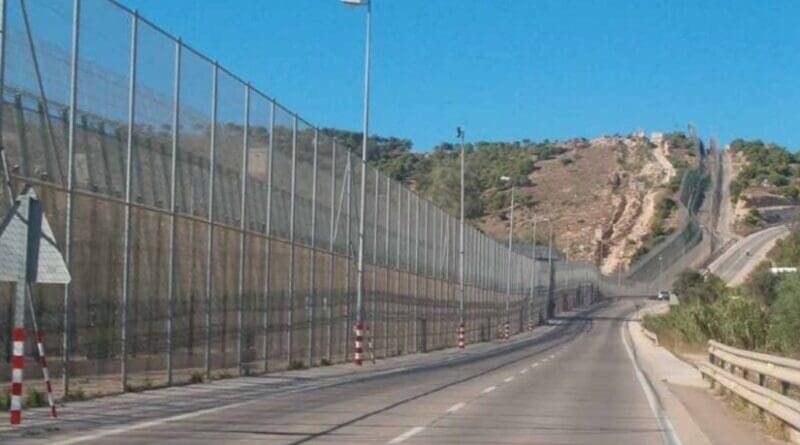
Between July 30 and 31, over 72,000 migrants entered Ceuta — an exclave under Spanish sovereignty claimed by Morocco — amid official reports that nearly 88 people have lost their lives attempting to reach the 18.5 km² territory. While the precise triggers of this unprecedented event remain unclear, we examine legal, strategic, international, and socioeconomic hypotheses to better understand this crisis.
Blame It on the Justice?
A primary hypothesis put forward by Spanish and Moroccan authorities links the crisis to a narrow interpretation of a recent Spanish Supreme Court verdict, misleading social media campaigns, and human trafficking networks. On July 8, the court ruling curbed fast-track deportations, known as devoluciones en caliente, for migrants who arrive by sea. The new mandate requires a formal deportation protocol for intercepted individuals.
Amplified by online misinformation, this ruling was misconstrued, tricking migrants into thinking they had unhindered access to Ceuta and Melilla. This rumor also coincides with a recent mass legalization plan running from April 16 to June 30. The initiative granted legal status to over 500,000 undocumented people who can prove they lived in Spain for at least five months prior to January 1, 2026.
Positioned along a primary migration corridor between Africa and Europe, Ceuta and Melilla are romanticized across Moroccan social networks as entryways to the European dream. These digital platforms also play a critical role in orchestrating synchronized departures. Travelling on foot, in inflatable rings, or by zodiacs, irregular migrants — colloquially known as harragas in the Maghreb — frequently chronicletheir grueling odysseys to the two exclaves and share useful tips on how to get past the border. Other harragas become allegories of hope for a disillusioned generation. Consider Farah, a young girl from Larache. Her border-crossing swim gained national attention after she flashed a victory sign and a triumphant smile at local Spanish TV cameras, reaching millions of viewers back in Morocco.
Migration as Coercion?
A second hypothesis, discussed by some Spanish and international media, claims Rabat may have loosened border restrictions to pressure Madrid over political issues. This hypothesis echoes the 2021 migration crisis in Ceuta, wherein a severe diplomatic rift between Madrid and Rabat led to an influx of roughly 8,000 people into the exclave. This wave of arrivals followed a relaxing of Moroccan border control near Ceuta, prompted by Spain’s hospitalization of Polisario Front leader Brahim Ghali. Consequently, Madrid endorsed Rabat’s autonomy plan for Western Sahara as the most “serious, credible, and realistic” framework to resolve the conflict. This pivot subsequently triggered a severe diplomatic fallout with Algeria, a key backer of the Polisario Front.
On July 20 — roughly 10 days prior to the Ceuta crisis — Spanish Prime Minister Pedro Sánchez traveled to Algiers to meet Algerian President Abdelmadjid Tebboune and launch a new era of bilateral ties. Diplomatic talks advanced on multiple fronts, including scheduling their eighth high-level bilateral meeting this coming October and boosting gas supplies via the Medgaz pipeline. The restoration of a strategic partnership between Algiers and Madrid may be viewed with sensitivity in Rabat, considering Algeria and Morocco have had no formal diplomatic ties since August 2021.
Morocco may also oppose the resumption of connectivity talks between Algeria and Melilla. Back in 2020, the Confederation of Melilla Entrepreneurs (CEME) pushed for a new maritime route connecting the exclave to the Algerian port of Ghazaouet. In December 2021, just months before diplomatic tensions flared between Algiers and Madrid, the Spanish Ministry of Transport confirmed that there was nothing blocking the opening of a new maritime route connecting Melilla to Algeria.
Next September, Spain’s Congress of Deputies will vote on granting citizenship to Sahrawis born under Spanish administration in Western Sahara, along with their descendants. Morocco may look askance at the Sumar Parliamentary group’s proposal — a left-wing coalition ally of Spain’s ruling socialist party PSOE — because the bloc has repeatedly criticized Prime Minister Pedro Sánchez for supporting Morocco’s plan for Western Sahara. The inclusion of these new voters could reshape domestic political debates and recalibrate Madrid’s diplomatic posture vis-à-vis Rabat.
Nevertheless, verifiable markers of a brewing crisis between Morocco and Spain remain absent. At the onset of the crisis on July 30, Morocco’s ambassador to Madrid, Karima Benyaich, said that Rabat “was not happy about the mass crossing.” On August 3, Spain’s Foreign Minister, José Manuel Albares, stated that Morocco providedimmediate cooperation at the start of the crisis.
A Geopolitical Score-settling?
A third hypothesis to explain the crisis in Ceuta is the consolidation of Morocco’s alliance with the United States and Israel at the expense of Spain. This rumor gained traction on social media platforms like X and was supported by notable figures, including former Podemos spokesperson Carolina Alonso and actor Javier Bardem.
Last March, at the onset of hostilities with Iran, Madrid precluded the United States military from using the Rota and Morón bases for operations in the Middle East. Recently, the US president, Donald Trump, also rebuked Spain for refusing to raise its defense spending to NATO’s new targeted level.
On a different note, Washington restated its support for Morocco’s sovereignty over Western Sahara as it recently celebrated the 250th anniversary of the Moroccan-American Friendship Treaty. The United States was, in fact, the first to recognizeMorocco’s sovereignty over Western Sahara. Emblematic of their deep-rooted partnership, Morocco recently named the highway connecting Tiznit to Dakhla in Western Sahara in honor of the American president.
Over the past few months, Morocco’s sovereignty claims over Ceuta and Melilla have attracted heightened attention in the United States. Setting a precedent in April, a United States House of Representatives committee referred to Ceuta and Melilla as Spanish-administered cities located in “Moroccan territory.” Earlier this year, the American Enterprise Institute think tank suggested that Morocco organize a Green March on Ceuta and Melilla to reclaim the exclaves.
Spain and Israel are currently navigating a severe diplomatic rift. In 2024, Spanish Prime Minister Pedro Sánchez made international headlines by officially recognizingPalestinian statehood and repeatedly condemning Israel’s approach in Gaza. More recently, Spain urged the suspension of the EU-Israel Association Agreement and permanently recalled its ambassador from Tel Aviv.
Meanwhile, Morocco and Israel have grown closer since renewing ties in December 2020, working together in defense, the economy, and tech. Surpassed only by the United States as a principal defense supplier to Morocco, Israel has substantially facilitated the modernization of Moroccan military technology, particularly in drone production and air defense systems.
In the wake of the Ceuta crisis, Israel’s permanent representative to the United Nations, Danny Danon, characterized Ceuta and Melilla as “colonial enclaves in Africa.”
Nevertheless, prudence dictates a cautious approach. Beyond expanding diplomatic ties and rhetorical support for Morocco’s stance on Ceuta and Melilla, empirical support is lacking to indicate any concerted strategy to precipitate a border crisis in Ceuta. Following the crisis, President Trump framed the situation as a “catastrophe” that “looked like the invasion of a country.” Dana Erlich, head of mission at the Israeli Embassy in Spain, also underscored that Danon’s statements “do not represent the position of the State of Israel.” Similarly, Israeli media like i24news pointed to a wave of anti-Semitic theories.
Socioeconomic Desperation Outgrows Borders?
A final hypothesis attributes the crisis to the precarious socioeconomic situation of a significant portion of the population in Morocco, most acutely the younger demographic. Despite growth in sectors like tourism, industry, and phosphate production, job creation stalls against a surging young labor force. Data from the Moroccan High Commission for Planning in 2025 indicated that unemployment affected nearly 37.2% of individuals aged 15 to 24. That same year, the number of school dropouts approached 280,000.
Rising living costs in Morocco have placed a heavy burden on the population, as higher fuel and food prices have severely damaged the purchasing power and savings of the working class and large segments of the middle class. Against this backdrop, entering Ceuta is seen as a propitious opportunity to reach the European economic market and improve one’s social standing.
The crisis in Ceuta might also be tied to the public’s decreasing faith in Moroccan political institutions. Despite the scale of the situation and the human toll, it tooknearly five days for the government to comment on the crisis. This silence prompts serious concern, particularly given that Moroccan youth — mobilized by the GenZ 212 collective — spent weeks demonstrating nationwide less than a year ago to demand critical reforms in education and healthcare.
Notwithstanding the various legal and diplomatic factors at play, the outcome of the recent events in Ceuta risks deepening social discontent in Morocco. Should this situation endure, the frequency of migration crises in Ceuta and Melilla will escalate.