
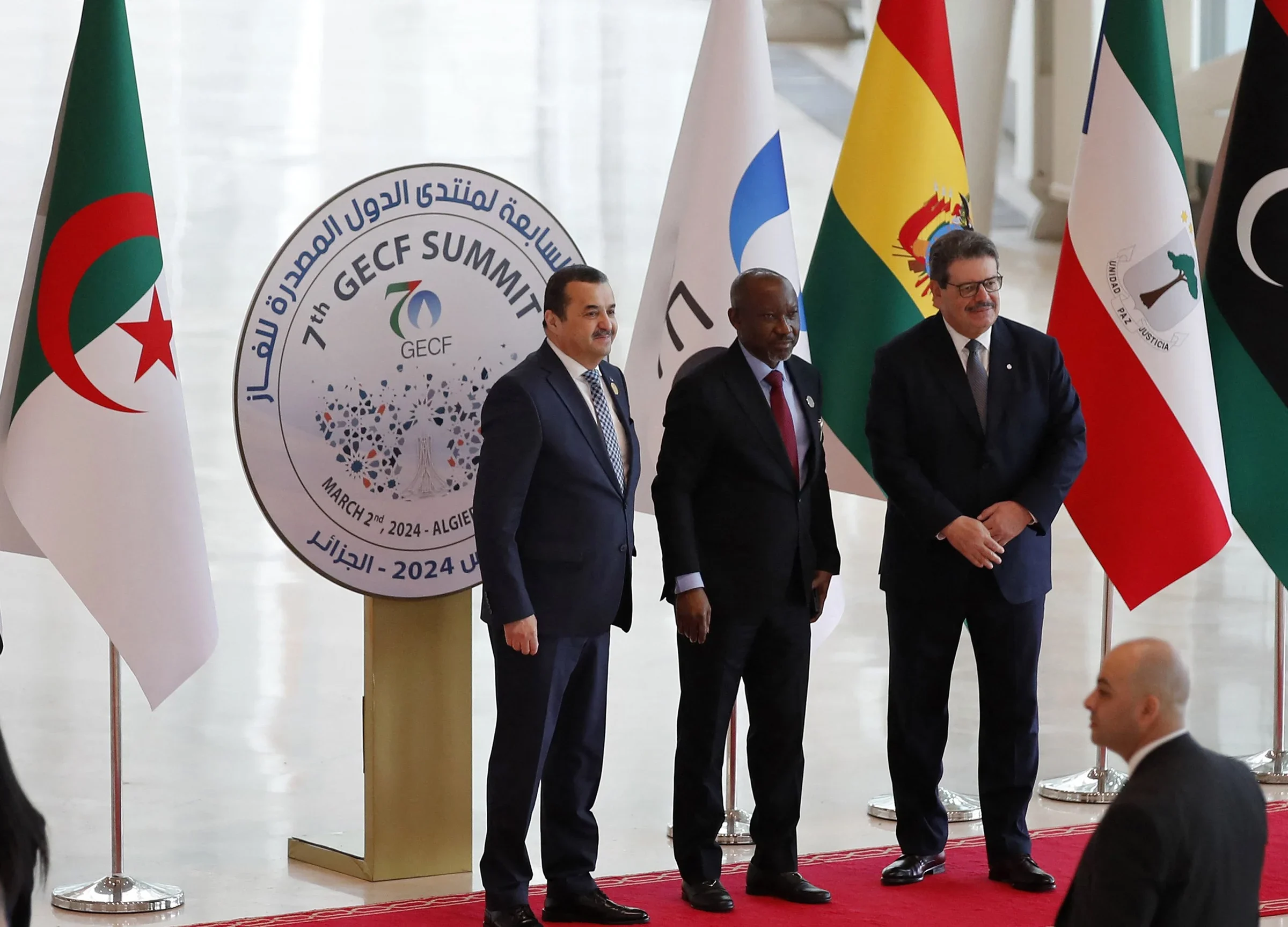
The launch of the Trans-Saharan Gas Pipeline comes as Algeria and Morocco compete fiercely to offer Europe an alternative to Russian gas.
Work on the Trans-Saharan Gas Pipeline (TSGP) began on 4 June in Algeria’s far south, “under the supervision” of the hydrocarbons and petroleum ministers of Algeria, Nigeria and Niger, along with officials from the three countries’ national companies, Algeria’s energy ministry said in a statement.
The start of work on the Algerian section of the pipeline, which will run for more than 4,000km, was hailed as a “historic event” by the ministry. It noted the presence of Algeria’s minister Mohamed Arkab, his Nigerian counterpart Ekperikpe Ekpo, Niger’s Hamadou Tini, and the heads of state-owned companies Sonatrach, Nigerian National Petroleum Company (NNPC) and Sonidep.
The inauguration of the site in the Adrar region followed a ministerial meeting of the project’s steering committee in Algiers. That meeting led to the “adoption of the final report of a feasibility study” by the British consultancy Penspen, according to the ministry.
A ‘turning point’
The start of construction marks “a turning point in the implementation of this strategic continental energy project”, the ministry said. The pipeline is intended to carry 20bn-30bn cubic metres of natural gas a year from Nigeria, through Niger, to Algeria. The ministry described it as “one of Africa’s largest structural projects”.
The natural gas could then be exported “to regional and international markets”, including Europe, the ministry said. Algeria has become one of Europe’s main suppliers in recent years, accounting for about 12% of European gas imports, after the boycott of Russian gas that followed Moscow’s invasion of Ukraine.
According to Algeria’s energy ministry, the section on which work has just begun will carry gas from Nigeria as well as “additional volumes produced in Algeria from several gas basins now being developed or newly opened, in particular Ahnet”.
Nigeria and the European market
When the Trans-Saharan Gas Pipeline was launched in 2009, its cost was put at $10bn. That estimate has since risen to between $13bn and $19.5bn. The pipeline is also meant to supply countries in the Sahel.
The project was revived against a geopolitical backdrop of strong global demand for gas and oil, and soaring prices, after Russia invaded Ukraine in February 2022.
Regional rivals Morocco and Algeria are pursuing two competing gas pipeline megaprojects linking them to Nigeria, with the European market in their sights.
Launched in 2016 and revived in 2023, the Nigeria-Morocco Gas Pipeline (NMGP) is expected to run for about 6,000km. It would cross 13 African countries along the Atlantic coast, carrying billions of cubic metres of Nigerian gas to Morocco. From there, it would connect to the Maghreb-Europe gas pipeline. Its cost has been estimated at $25bn.