
While international powers publicly call for de-escalation and humanitarian ceasefires, their regional allies are flooding Sudan’s battlefields with weapons
Nearly three years into a conflict that has killed tens of thousands and displaced millions, Sudan presents a stark contradiction.
While international powers publicly call for de-escalation and humanitarian ceasefires, their regional allies are flooding the battlefield with weapons.
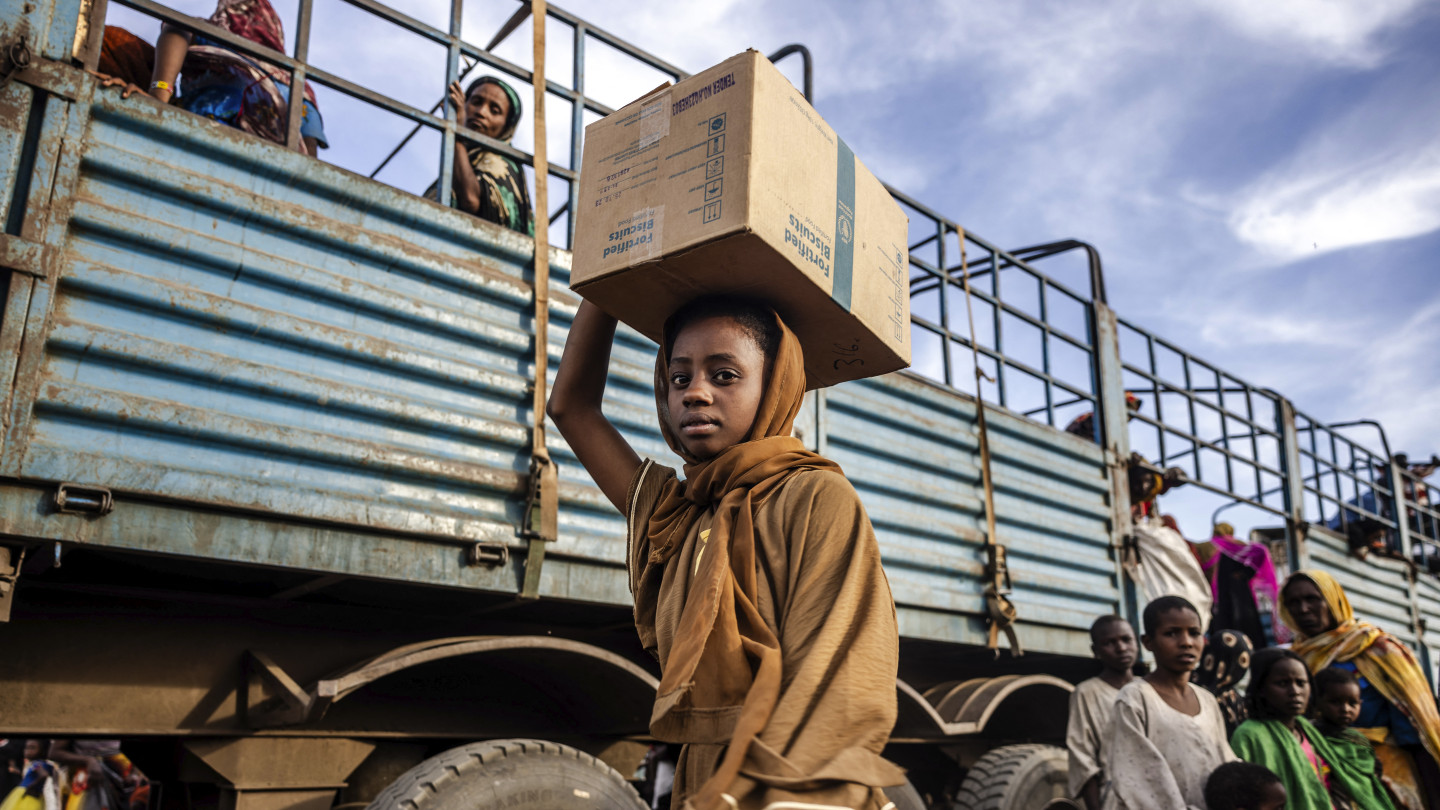
The result is a humanitarian catastrophe that the United Nations describes as the world’s worst. More than 30 million Sudanese, over half the population, need aid. Cities are starving, infrastructure is collapsing, yet the war continues to accelerate.
This contradiction is not accidental. For many regional and international actors, the war’s continuation serves strategic and economic interests far better than its resolution.
The $1.5 billion question
In 2025, Sudan’s military signed a $1.5 billion weapons deal with Pakistan. The package includes fighter jets, over 200 drones, and air defence systems, according to local media reports.
But political analysts tracking the conflict say that these weapons have already arrived and are being deployed across Kordofan, where military operations have escalated dramatically since January 2025.
Political analyst Ahmed Khalil argues that the Pakistani weapons deal represents a calculated escalation.
“The military got the Pakistani arsenal precisely because it proved effective in the 2025 India-Pakistan clash,” he explains, with battlefield successes becoming a justification for the huge arms deal, which was funded and supported by allied powers.
The timing is telling. As international envoys pushed for negotiations, these weapons were being integrated into active combat operations. The contradiction reveals something fundamental about how various regional powers view Sudan’s conflict: not as a problem to solve, but as an arena where strategic competition plays out at the expense of civilians.
War as strategy, not failure
Political analyst and journalist Majahid Abdullah Al-Fatarabee articulates a more systemic explanation. Sudan’s war, he argues, is no longer primarily a domestic power struggle. It has become a proxy conflict where geopolitical interests converge with what he calls the “war economy”, the commodification of conflict itself.
“War is no longer just a political pressure tool,” Al-Fatarabee explains to The New Arab. “It has become a profitable business: weapons flows, illicit access to resources, and restructuring of influence in strategically vital regions.”
Sudan occupies a unique position in this equation. It sits at the convergence of Africa’s most volatile region, controls vast agricultural, petroleum, and mineral resources, and has long been contested by multiple powers.
A strong, sovereign Sudan, one that could leverage its resources independently, threatens the regional balance that several neighbouring states depend on for their own stability.
This creates a perverse incentive: a weakened Sudan, exhausted by perpetual conflict, is more manageable than a unified, prosperous one.
“A strong Sudanese state with true economic sovereignty would reshape regional power dynamics,” Al-Fatarabee notes. “That’s precisely why many powers prefer a Sudan kept weak through prolonged conflict”.
The peace illusion in Sudan
Regional calls for ending the war sound earnest in diplomatic channels. But Al-Fatarabee argues that this rhetoric masks a different objective: not resolving the conflict but reproducing it in more manageable forms.
“The repeated discourse about wanting to stop the war can be read as conditional,” he explains to TNA. “The goal is not ending the conflict, but re-engineering it, creating cheaper political costs while ensuring outcomes that produce a compliant government, or at least one that isn’t hostile to those interests.”
The distinction is crucial. True peace leading to a stable, democratic Sudan, with civilian rule, genuine sovereignty over resources, and independent decision-making, would contradict the interests of authoritarian regional systems that fear democratic contagion. Those same systems benefit from a Sudan too fractured to challenge them.
“A settlement that keeps Sudan’s sovereign decision-making amenable to external pressure and resource extraction, that’s the actual objective,” Al-Fatarabee argues. “Not a peace that produces justice and prosperity for the Sudanese people.”
Civil society’s limited leverage in Sudan
Despite these structural obstacles, Sudanese civil forces have mobilised. In early 2026, the Democratic Alliance for Revolutionary Forces, led by former Prime Minister Abdulla Hamdok, organised delegations to European capitals to present Sudan’s case to international decision makers.
Khalil acknowledges that these efforts have had some impact. But their influence remains constrained by organised opposition from both warring parties and their backers. Civil activists face protests and personal attacks when they travel abroad to advocate for peace.
The message is clear: those profiting from war are not interested in civil society interrupting their interests.
This dynamic explains why, despite clear evidence of regional engagement and weapons flows, some academics dispute certain narratives.
Political scientist and professor Salah al-Duma, for instance, questions the authenticity of the Pakistan deal, calling it “a baseless lie” propagated by conflict parties to maintain supporter morale as their backing erodes.
Al-Duma argues that only the international quartet, led by the United States, Saudi Arabia, Egypt, and the UAE, offers a viable path to ending the conflict. Yet even this consensus position reveals the subordinate role Sudan’s own civil forces play, with peace being architected externally, not by the Sudanese themselves.
The sovereignty question
Both analysts converge on a critical point: Sudan’s path out of this cycle requires restoring independent Sudanese agency. As long as Sudan’s political future remains captive to external agendas, whether driven by regional powers or international ones, the conflict remains inexhaustible.
“The tragic reality Sudan faces today is not merely the result of domestic power struggles,” Al-Fatarabee argues. “It’s the cumulative product of tangled regional and international interests operating within a state lacking full sovereignty”.
Genuine resolution requires Sudanese people reclaiming control of their national decisions, decoupling their political future from external agendas, and redefining peace not as a temporary ceasefire or influence-sharing arrangement, but as the foundation for true sovereignty and development.
Until then, the paradox of peace proposals on the international stage, as weapons continue flowing to the battlefield, will persist. Both coexist because they serve the same underlying interest, maintaining a Sudan too fractured to threaten the regional order that benefits from its weakness.