
Sudan has arrested the commander of an armed Islamist group for pledging to fight on behalf of Iran’s clerical regime.
Sudanese Islamist leader Al-Naji Abdullah appeared in military uniform on March 4 publicly vowing to send fighters to Iran should the United States or Israel launch a ground operation. “Our rifles and cannons are ready, and we possess advanced generations of drones,” he declared, adding, “By God, we will send all our battalions to Iran, and you will find us there.”
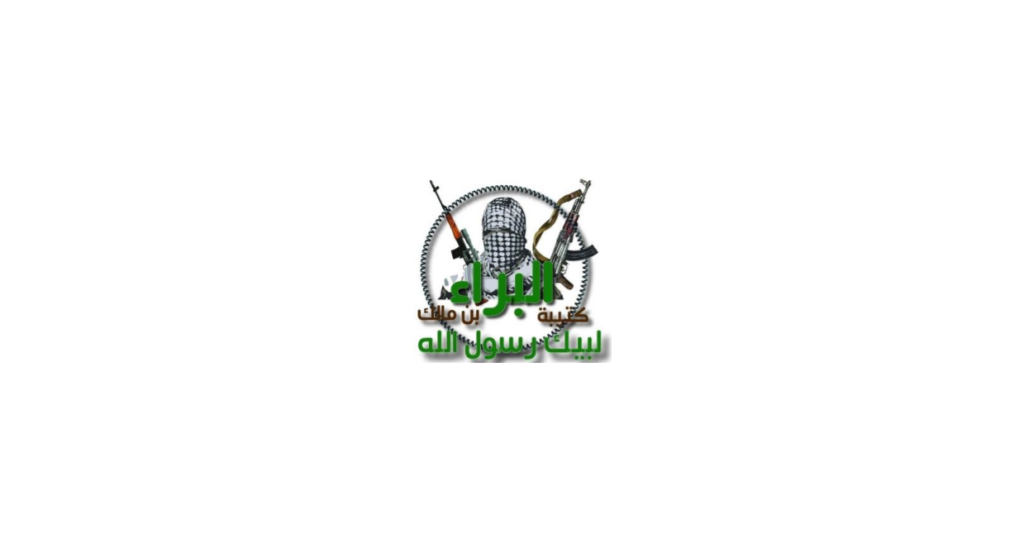
Abdullah is a commander within the al-Baraa Bin Malik Brigade, an Islamist formation aligned with the Islamic Movement, the Sudanese arm of the Muslim Brotherhood, which has been fighting alongside the Sudanese Armed Forces (SAF) since the civil war began in April 2023.
In response, the SAF arrested Abdullah and disavowed his group, claiming that the militia is not affiliated with it. That denial is difficult to square as the al-Baraa Bin Malik Brigade has operated as a frontline auxiliary unit alongside SAF forces throughout the war. Despite recent restructuring efforts, Islamist elements remain embedded within Sudan’s military apparatus.
The SAF Has Long Tolerated Islamist Elements Within Its Ranks
The SAF’s entanglement with Islamist movements predates the current war. Under former dictator Omar al-Bashir, the regime fused military power with Islamist ideology, empowering paramilitary structures such as the Popular Defense Forces (PDF) to defend the state and suppress dissent. When Bashir fell in 2019, the networks he cultivated did not disappear.
The al-Baraa Bin Malik Brigade — sanctioned by the U.S. in September 2025 in an effort to “limit Islamist influence in Sudan and curtail Iran’s regional activities” — traces its lineage directly to these Islamist paramilitary formations. After the PDF was formally dissolved following the revolution in 2019, the brigade emerged as a distinct entity on January 7, 2020. Originally conceived as a shadow force to protect the regime from coups and internal threats, it eventually evolved into frontline unit.
When civil war erupted in April 2023 between the SAF and the Rapid Support Forces (RSF), the SAF relied heavily on Islamist-aligned brigades to reinforce its ranks. Fighters associated with the dissolved National Congress Party (NCP) and other Islamist networks played a key role in breaking RSF sieges in and around Khartoum. The war created space for the resurgence of Islamist actors who had been politically marginalized after 2019 but remained organizationally intact.
This reliance has drawn concern from Western and regional partners, who fear that Sudan’s war effort is becoming a vehicle for the rehabilitation of Muslim Brotherhood-aligned forces.
Despite August Reforms, Islamist Loyalties Remain Embedded in the SAF
In August 2025, SAF chief Abdel Fattah al-Burhan reshuffled senior leadership, retiring long-serving officers and appointing a new inspector general after the RSF killed his predecessor. Several outgoing generals reportedly had ties to Islamist networks linked to the former regime of Omar al-Bashir. The move was widely read by SAF allies as al-Burhan’s attempt to purge his forces of Islamists.
Burhan also consolidated authority by placing all allied armed groups under his direct command. The aim was control without losing manpower. But Abdullah’s March 4 pledge to support Iran demonstrates that Islamist loyalties persist.
Washington Should Condition Engagement on Measurable Islamist Purges
The arrest of an SAF commander aligned with Sudan’s Muslim Brotherhood is a step in the right direction, but it is a reminder that Islamist influence in Sudan’s military remains a problem.
To remain diplomatically engaged, Washington should demand that al-Burhan demonstrate measurable progress by continuing to remove officers and units with documented ties to Islamist movements. Absent sustained pressure, the United States risks enabling the very Islamist factions it has sanctioned.