
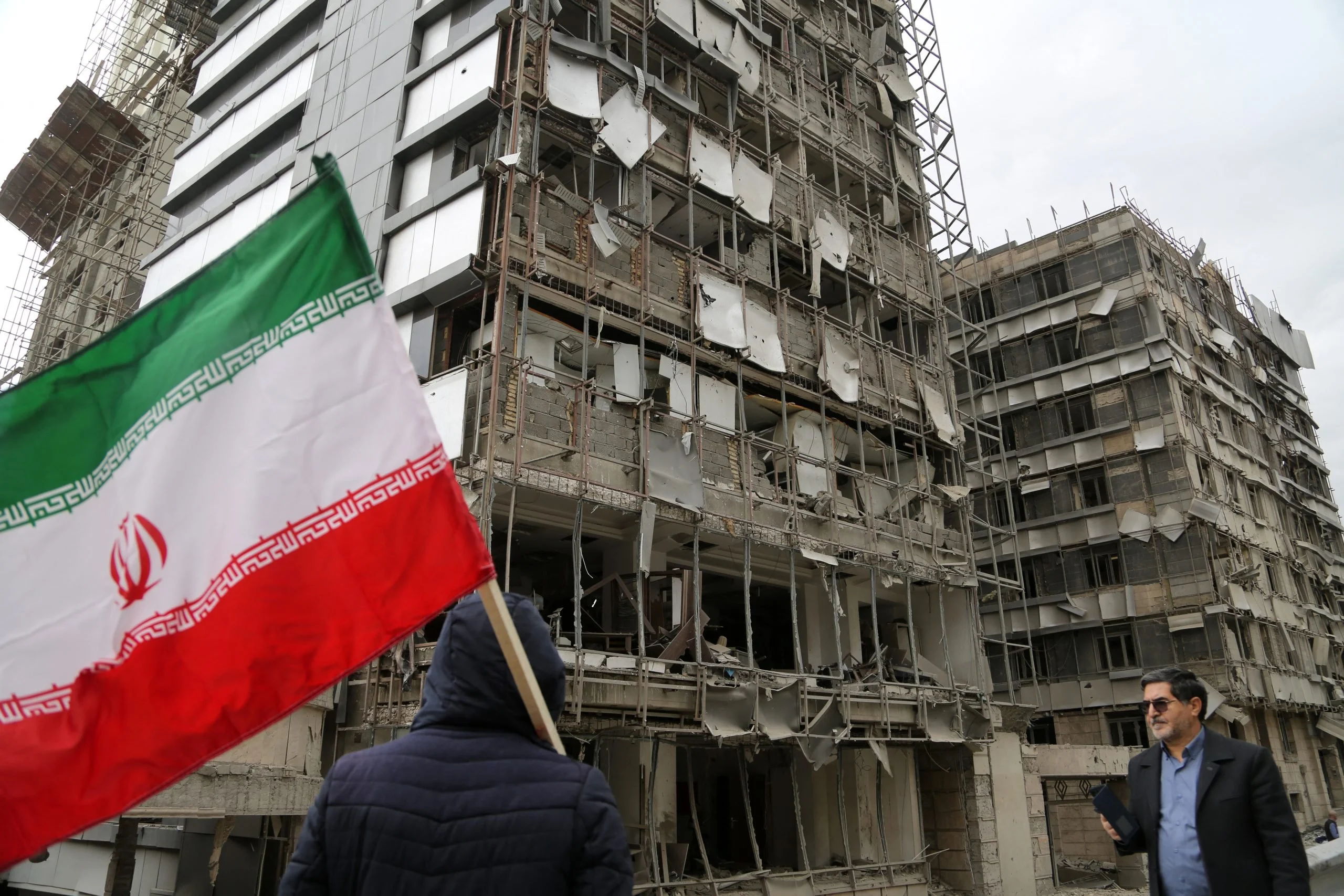
Horn states side with Gulf monarchies, South Africa and Senegal invoke international law and West Africa treads carefully; Africa’s unity is strained by global power politics.
Since the US and Israel launched Operation Epic Fury and Operation Roaring Lion against Iranian targets, the missiles have been landing in the Middle East.
Iran has responded with strikes across the Gulf, hitting the United Arab Emirates, Saudi Arabia, Qatar, Kuwait, Bahrain, Jordan and Iraq.
While the fighting is unfolding there, the political shockwaves have travelled straight through African capitals.
Responses from governments are being shaped by ports and Red Sea routes, remittances from the Gulf, oil prices, security partnerships with Washington and quiet judgments about who is likely to emerge stronger when the dust settles.
Some governments have openly condemned Iran. Others have warned against Western military overreach.
Several are choosing their words carefully, trying not to alienate either side.
The Horn: Loud on Tehran, quiet on Washington and Tel Aviv
In the Horn of Africa, location is policy. Where you sit on the map often counts for more than what you say about principle.
Across the region and in Kenya, governments have been quick and clear in condemning Iran, while saying nothing about the role of the US and Israel in setting off the confrontation.
In the self-declared Somaliland, the authorities “strongly condemned” Iranian strikes on Gulf states, describing them as “unprovoked aggression” against the UAE, Qatar, Kuwait, Bahrain, Saudi Arabia and Jordan.
The stance was hardly surprising. Emirati investment in Berbera Port and expanding security cooperation sit at the heart of Somaliland’s economic model and its long-running bid for international recognition.
The geopolitical stakes extend beyond the Gulf. Israel recently became the first country to formally recognise Somaliland as a sovereign state, a breakthrough that dramatically shifted the diplomatic landscape in the Horn.
Meanwhile, the Trump administration has signalled openness to considering a similar move, as officials in Hargeisa openly market strategic port access and potential military basing rights to Washington in exchange for recognition.
Somalia also condemned Iran’s attacks, expressing solidarity with Saudi Arabia, Qatar, Kuwait, Jordan, Bahrain and Oman.
However, Mogadishu deliberately left out the UAE, a pointed omission.
Relations between Somalia and Abu Dhabi have been strained since Israel recognised Somaliland as an independent state, a move Mogadishu believes the UAE quietly supported.
Somalia later pulled out of port agreements linked to Berbera and Bosaso.
Like Somaliland, Somalia criticised Iran’s retaliation and not the US or Israel’s initial action.
‘Atrocious attack’
In Ethiopia, Prime Minister Abiy Ahmed went further, holding a direct call with Kuwait’s Crown Prince Sheikh Sabah Khaled Al-Hamad Al-Sabah.
Abiy condemned what he described as an “atrocious attack” on Kuwait’s sovereignty and airspace, pledging solidarity with its leadership and people.
The medium term will bring severe global economic disruptions as oil markets convulse and the Strait of Hormuz emerges as a critical vulnerability for energy importers, including many African countriesMillions of Ethiopians live and work in Gulf countries and remittances are a lifeline for the economy.
Red Sea security and Gulf stability are tied to foreign exchange, employment and political stability at home.
Further south in Kenya, President William Ruto issued one of the clearest condemnations on the continent.
Kenya “strongly condemns the strikes” on Gulf states, Ruto said, warning that the regionalisation of the conflict threatens international peace and security.
“In Somalia’s case, alignment with Saudi Arabia is particularly relevant,” says Federico Manfredi Firmian, visiting scholar at the School of International Service at American University and Associate Research Fellow at the Institute for International Political Studies (ISPI).
“Somaliland’s posture is shaped by Israel’s recognition of its government and by its strong ties to the UAE. Kenya also has security and diplomatic ties with Israel and solid ties to the Gulf states. All these governments also want to maintain good relations with the US.”
Cheta Nwanze, a risk analyst at Lagos-based SBM Intelligence, says decision by these governments to blame Iran and leave out the US and Israel is about geopolitics.
“They are gambling that the US-Israeli alliance would win, and would have more influence going forward,” he tells The Africa Report. “So they want to be on the right side of such an outcome.”
South Africa and Senegal choose law, order and global precedent
If the Horn leaned toward Gulf alignment, South Africa and Senegal struck a different tone.
President Cyril Ramaphosa expressed deep concern about the escalation and emphasised that Article 51 of the UN Charter permits self-defence only when a state has suffered an armed attack.
“Anticipatory self-defence is not permitted under international law,” Pretoria said, language widely seen as a critique of US–Israeli doctrine.
In Dakar, Prime Minister Ousmane Sonko was even more direct: “A country, without a resolution or a mandate from the United Nations, can decide to strike other countries, to assassinate their leaders. It must be said as it is. This is extremely serious and the whole balance of the world that has been built over the last 50 years is compromised.”
Sonko’s critique of the war went beyond immediate events in the Middle East.
For him, what is at stake is the erosion of the rules that underpin global order.
Many African governments lean on international law as a shield against great-power intervention and external pressure.
Anticipatory self-defence is not permitted under international lawIf powerful countries can bypass multilateral norms with impunity in one context, analysts warn, it sets a precedent that could undermine those same norms elsewhere, including in Africa.
This worry is not unique to the Middle East crisis. Sonko has in the past voiced concern about powerful states acting unilaterally and weakening established international rules, arguing that when big powers start to write their own rules, the concept of a stable international order itself loses meaning.
Nigeria, Ghana choose strategic hedging
In West Africa, caution has been the default setting so far. The Nigeria foreign ministry called for “maximum restraint” and strict adherence to international law, without condemning either Iran or the US–Israeli coalition.
Abuja cooperates closely with Western security partners, maintains trade ties with Gulf states and manages a religiously diverse domestic landscape sensitive to Middle Eastern politics.
Ghana adopted similarly measured language, urging de-escalation and focusing on the safety of its nationals abroad.
The Gambia echoed that caution, calling for “maximum restraint” and stressing the protection of civilian lives and infrastructure.
The implications for Africa
Beyond statements and positioning, the risks are real. SBM Intelligence warns that early military success for Washington and Tel Aviv may not settle the conflict.
“In the short term, the US-Israeli coalition will secure significant tactical achievements… However, these gains will prove strategically deceptive as Iran’s institutional resilience enables sustained asymmetric retaliation,” it said in a report released Monday.
The report adds: “The medium term will bring severe global economic disruptions as oil markets convulse and the Strait of Hormuz emerges as a critical vulnerability for energy importers, including many African countries.”
Oxford Economics similarly cautions “the immediate, near-term risks to African nations are mainly confined to upswings in global oil prices and weakening exchange rates…”
It also warns that US-aligned assets in Africa could become symbolic targets and that religious tensions could intensify in multi-faith societies.
Ryan Cummings, director at Signal Risk, says the danger isn’t confined to the Gulf.
“One issue to watch is the future of the Chagos archipelago transfer to Mauritius given the US Diego Garcia base… Also, Houthi strikes against Israeli allies in the Horn of Africa could also escalate.”