
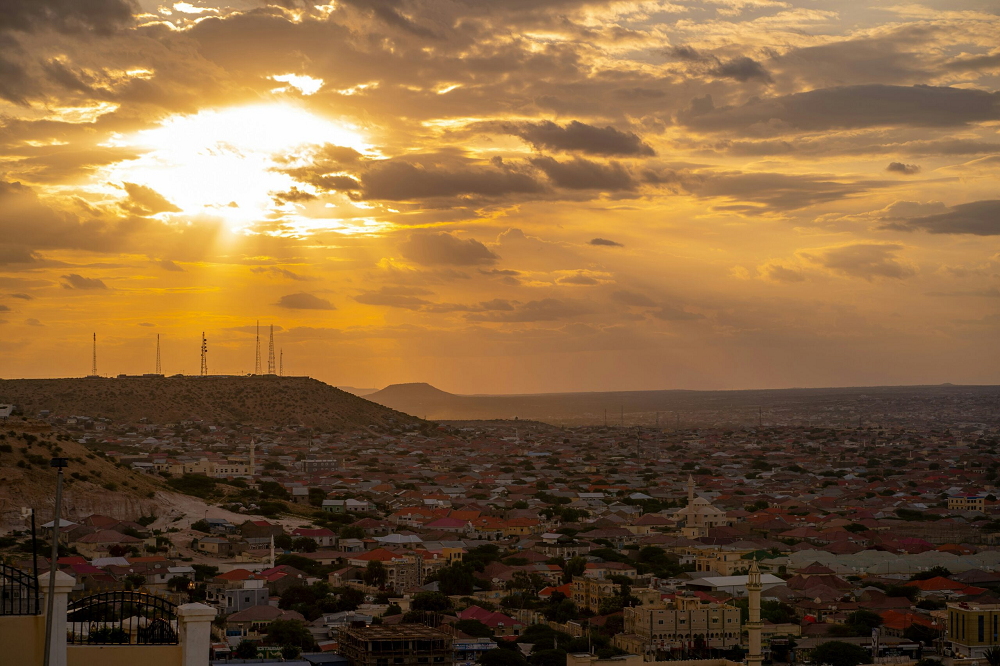
On Dec. 26, 2025, Israel sent shockwaves across the diplomatic world by becoming the first country to recognize Somaliland’s independence. The self-governing area has claimed independence from Somalia since 1991.
The international condemnation of Israel’s recognition was swift. Three days later, the United Nations Security Council (UNSC) held an emergency session on the matter, during which 14 of the UNSC’s 15 members expressed opposition to Israel’s decision. Many argued that Israel’s recognition violates the principles of the UN Charter around the recognition of a breakaway state’s sovereignty and risks destabilizing an already fragile region. Somalia’s ambassador to the UN, for example, said that Israel’s recognition encouraged “the fragmentation of the territory of Somalia … and is destabilizing the entire Horn of Africa and the Red Sea region.”
A few countries also expressed concern about Israel using its newfound partner to achieve broader geopolitical aims, particularly as it relates to the forced displacement of Palestinians from Gaza to Somaliland. On this issue, Pakistan’s deputy UN representative said that “Pakistan unequivocally rejects any proposals or plans aimed at the forced displacement of Palestinians.” France’s ambassador also alluded to this issue, saying, “France will continue to oppose any forced displacement of civilian populations.”
The United States was Israel’s sole defender on the Council, with Deputy US Ambassador to the UN Tammy Bruce arguing that “meetings such as today’s distract from serious work,” and that “Israel has the same right to conduct diplomatic relations as any other sovereign state.”
Israel’s deputy ambassador, who was invited to the meeting, defended his country’s decision, insisting that it was “a lawful, principled acknowledgment of a long-established reality, consistent with international law.”
In a statement publicizing its recognition of Somaliland, Israel said nothing about its broader regional geopolitical ambitions nor any desire to use Somaliland as a destination for displaced Palestinians. Instead, the statement said that Israel “plans to immediately expand its relations with the Republic of Somaliland through extensive cooperation in the fields of agriculture, health, technology, and economy.”
Although details of any potential quid pro quo agreement between Somaliland and Israel have not been made public, Israel was perhaps incentivized to recognize Somaliland in part for access to the country’s minerals. Somaliland’s president told Reuters in early February that his country is actively negotiating a trade agreement with Israel, and is looking to offer its partner access to its vast mineral wealth.
From Israel’s perspective, building relations with Somaliland could also be beneficial from a security standpoint if such a relationship were to eventually lead to greater Israeli access to land near the Gulf of Aden, which, through the Bab el-Mandeb Strait, connects to the Red Sea — one of the world’s most heavily trafficked shipping lanes. More recently, the waterway’s geopolitical significance has grown, with the Red Sea becoming the battleground of an expanded war in Gaza, with attacks by anti-Israel Houthi rebels from Yemen against ships traversing the sea.
From Somaliland’s perspective, Israel’s recognition provides the breakaway state diplomatic clout, and could open the door for Israel’s closest international ally — the United States — to soon recognize the breakaway region as well, which Trump has contemplated in the past.
Although Israel’s full ambition for its relationship with its newfound partner remains to be seen, what has become clear in the weeks since its December recognition is that the regional cleavages over the Somalia-Somaliland controversy are intensifying. Saudi Arabia, Qatar, and Turkey are deepening their support for Somalia in the wake of Israel’s recognition, while the UAE has joined Israel in extending its support to Somaliland.
On Feb. 9, Somali Defense Minister Ahmed Moallim Fiqi and Saudi Defense Minister Khalid bin Salman bin Abdulaziz met in Riyadh to sign a memorandum of understanding (MOU) with the aim of facilitating “military cooperation” between the two. This is the second major military cooperation agreement signed between Somalia and a partner country since Israel’s recognition of Somaliland in December. Last month, Somalia signed a similar agreement with Qatar, reportedly laying the groundwork for military training between the two as well as the development of defense capabilities.
In the weeks since Israel’s December recognition of the break-away state, the regional cleavages over the Somalia-Somaliland controversy are intensifying.Meanwhile, Somalia is deepening its relationship with Turkey, which has for years provided the Somali military with a wide variety of weapons, and has its largest overseas military base in Somalia since 2017. In January, Turkey sent F-16 fighter jets and attack helicopters to Somalia to be used in operations against the armed group al-Shabab. The economic relations between the two are also tightening. Earlier this month, Turkey’s state-owned oil company, TPAO, dispatched a deep-sea drilling ship off Somalia’s coast following an agreement signed in March of 2024.
Turkish President Recep Tayyip Erdogan has openly expressed his disdain for Israel’s recognition. In a joint press conference in the Ethiopian capital of Addis Ababa on Feb. 17, he said that Israel’s decision to recognize Somaliland “would benefit neither Somaliland nor the Horn of Africa.” The Somaliland government responded by saying that Erdogan’s comments amount to “unacceptable interference aimed at discouraging relations between Somaliland and regional partners.”
The venue for Erdogan’s sharp words is a bit ironic, given that Ethiopia itself was not long ago caught in the center of the controversy over Somaliland recognition. In early 2024, Ethiopia signed an MOU with Somaliland in which it agreed to recognize the breakaway state as a free and independent country in exchange for a 50-year lease of a 20-kilometer (12.4-mile) stretch of land on Somaliland’s coast along the Gulf of Aden. Ethiopia has been landlocked since Eritrea broke away in 1991, and has sought to regain access to one of the world’s most valuable bodies of water ever since. But following a successful mediation effort by Turkey, Ethiopia’s relations with Somalia thawed, and it backed away from the deal, leaving Somaliland unrecognized by any government until Israel’s recognition in late December.
While Israel remains the only state to officially recognize Somaliland, it isn’t the only one to offer its support to the breakaway region. Cameron Hudson, a former Africa director at the US National Security Council, told Responsible Statecraft that “many people argue that, behind the scenes, it’s the UAE that supported and even encouraged this Israeli recognition of Somaliland.” Indeed, the UAE has a stake in Somaliland’s success. Through its government-owned logistics company DP World, the UAE spent over $400 million on the development and operations of Somaliland’s Berbera Port. Moreover, the UAE has started accepting travelers with Somaliland passports, while rejecting those traveling under Somali ones.
The schism over Somaliland has worsened relations between the UAE and its once close partner, Saudi Arabia. In January, just weeks before signing its own military cooperation agreement with Somalia, Saudi Arabia accused the UAE of facilitating the transportation of the Yemeni separatist leader Aidarous al-Zubaidi from Yemen to Somaliland, before then sending him onwards to Abu Dhabi. In response to these suggestions, Somalia abruptly ended all agreements with the UAE, including those dealing with port operations, security, and defense. Within weeks, it signed the aforementioned agreements with Qatar and Saudi Arabia.
Abu Dhabi and Riyadh find themselves on different sides of the civil war in Yemen, with the UAE supporting southern separatists while Saudi Arabia supports groups looking to unify Yemen under one government. The two are also on opposite sides of the nearby Sudan civil war, with the UAE supporting the paramilitary Rapid Support Force and Saudi Arabia supporting the Sudanese Armed Forces.
Questions now abound over which other states might soon lend their support to one side of the Somali controversy. Talk of the United States potentially recognizing Somaliland is intensifying, with US Senator Ted Cruz having openly expressed his desire to have his government officially recognize Somaliland’s independence.
Somaliland’s pursuit of American recognition is reportedly ramping up. The breakaway country’s minister of the presidency, Khadar Hussein Abdi, told Agence France-Presse that “we are willing to give exclusive (access to our minerals) to the United States. Also, we are open to offer military bases to the United States” in exchange for US recognition. In an effort to fend off Somaliland’s charge, Somalia reportedly offered the US a similar deal in response.
For now, Trump continues to accept the One Somalia Policy.