
To uproot the seeds of radical Islamist ideology and render its soils infertile for the nourishing, germination and blooming of violent Jihadism will require the reversal of Islamism and secularisation of the Muslim north.
The conflict between religion and citizenship in the Muslim north, arising from pervasive Islamism, is a major enabler of the incubation of Islamist jihadi terror groups. And the mainstream Islamic authorities have a responsibility to resolve this conflict by effectively separating religion from the state in the Islamic theological framework that guides the Muslim community in the region, as the most Islamic states are not Muslim dominated countries that are ruled by Sharia but plural, secular and democratic countries…
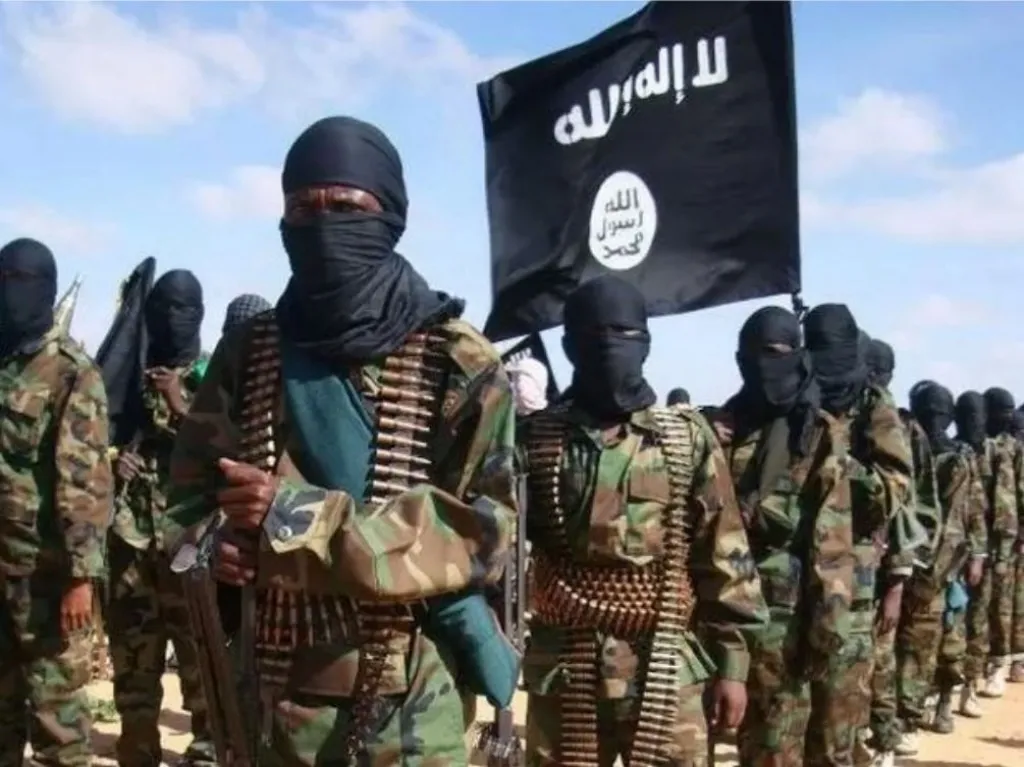
For a region that has been plagued by terror groups, ranging from the Maitatsine riotous sect in the 1980s to Boko Haram insurgents in the 2000s, the emergence of a new Islamist group in the Muslim north of Nigeria has become one too many. Given the name “Lakurawa” by the locals, this new terror group that has been identified by Nigeria’s security forces is operating out of Kebbi and Sokoto states in North-West Nigeria, along the border with the Republic of Niger. Said to be made up of foreign elements from the Sahel, the Lakurawa first appeared in northern Nigeria sometime in 2017 as a reformatory religious group and skilled herdsmen who were armed. And with their relatively high armament capabilities, they helped protect herder communities from the criminal activities of cattle rustlers, under a transactional arrangement. Described as a “faith based group” by the government of the affected states, the Lakurawa, in addition to helping herder communities combat cattle rustling, also engaged in proselytising the people into their version of Islam, just as they began to exercise quasi-judicial functions in line with the Sharia.
Like the Boko Haram, whose real appellation is Jama’at Ahl-as Sunnah lid-Da’wah wa’l-Jihad [Congregation of the People of Prophetic Tradition for Proselytisation and Armed Struggle], the Lakurawa seeks to establish a puritanical Islamic state in Nigeria, to be ruled through their own version of Islamic law. While Nigeria is still battling to extinguish the fire of Boko Haram insurgency in its North-East corner, the emergence of Lakurawa in the North-West, which is said to be heavily armed and in control of some villages as well as communities in Sokoto and Kebbi states, is a clear indication that the Muslim north of Nigeria is a fertile ground for the planting, germinating and nourishing of the seeds of radical Islamist ideology that eventually blossoms into Jihadi groups like Maitatsine, Boko Haram, and Ansaru, etc.
And the main element of this fertility is the dominance of Islamism in the mainstream Islamic theological framework in the Muslim north of Nigeria. In fact Islamism, which is “a broad set of political and religious ideologies that dictates Islam should guide and influence the political and legal system of the state in opposition to secularism,” is mainstreamed in the Muslim north to the extent that political Islam is being surreptitiously deployed to undermine Nigeria’s secular constitutional democratic order. Predictably, the Lakurawa group is spreading southwards, making a heavy landfall in Kwara, a gateway state to South West Nigeria. The recent massacre and abduction of hundreds of people in Moro village is believed to have been carried out by the terror group.
To uproot the seeds of radical Islamist ideology and render its soils infertile for the nourishing, germination and blooming of violent Jihadism will require the reversal of Islamism and secularisation of the Muslim north, going forward. To this end, all instruments of political Islam, along with the imposition of religious laws [Sharia] and enforcement agencies [Hisbah] must be dismantled forthwith.
The continuous and pervasive proselytisation of Islamism in the Muslim north, within a larger Nigeria, which is a multi-religious and cultural country, is a form of self-immolation that is now threatening to incinerate the entire country. This is self-immolation because the epicentre of Jihadi insurgency in Nigeria has been Borno, the oldest place of Islam in Nigeria, and Lakurawa has just emerged from Sokoto, the seat of the Caliphate. The collective incineration is in the fact that the Nigerian State will continue to be responsible for the containment of Islamist insurgency through its security forces. But before the rest of non-Muslim Nigeria grow weary of this collective incineration, arising from the religious self-immolation of the Muslim north, it has become imperative to re-think Islamism with the intention to reverse all of its influences through deliberate reform of the mainstream Islamic theological framework, that currently guides the Muslim faithful in northern Nigeria.
To uproot the seeds of radical Islamist ideology and render its soils infertile for the nourishing, germination and blooming of violent Jihadism will require the reversal of Islamism and secularisation of the Muslim north, going forward. To this end, all instruments of political Islam, along with the imposition of religious laws [Sharia] and enforcement agencies [Hisbah] must be dismantled forthwith. There is an ideological convergence between purveyors of political Islam and Jihadi groups like Boko Haram and Lukarawa, as they all share the aspiration of the creation of an Islamic state in a religiously plural Nigeria. And it is the failure of political Islam to achieve this utopia of an Islamic state that resulted in the use of arms to achieve the same goal. Any region wherein people are mobbed to death for blasphemy, bottles of alcoholic beverages are destroyed, and people of other faiths are treated as third class citizens, will always be plagued by Boko Haram and Lakurawa. The Lakurawa group, for instance, was able to gain acceptance in parts of Sokoto and Kebbi states since 2017 because it is a faith based group with the same aspiration for a Sharia ruled Islamic state.
Secularism is not a substitute for religion, neither is it anti-religion. It simply means the separation of the state and religion in a multi-religious Nigeria. Fortunately, the country’s secular constitution allows its Muslim citizens the uninhibited practice of their “Sharia faith” without hindrance. What the constitution does not allow is to impose one’s religious laws and value system upon others within the federation of Nigeria.
Secularism is not a substitute for religion, neither is it anti-religion. It simply means the separation of the state and religion in a multi-religious Nigeria. Fortunately, the country’s secular constitution allows its Muslim citizens the uninhibited practice of their “Sharia faith” without hindrance. What the constitution does not allow is to impose one’s religious laws and value system upon others within the federation of Nigeria. While the constitution does not impose the consumption of alcohol, pork and the committing of adultery as mandatory citizens’ obligations without exemption, Muslims should simply abstain from consuming these “haram items” without seeking to force others to do the same, especially those whose religious or value systems do not prevent them from indulging in such. And as long as the constitution guarantees Muslims the observance of Sharia faith, as it currently does, the advocacy for the adoption of Sharia law is as unnecessary as at is negatively disruptive.
The conflict between religion and citizenship in the Muslim north, arising from pervasive Islamism, is a major enabler of the incubation of Islamist jihadi terror groups. And the mainstream Islamic authorities have a responsibility to resolve this conflict by effectively separating religion from the state in the Islamic theological framework that guides the Muslim community in the region, as the most Islamic states are not Muslim dominated countries that are ruled by Sharia but plural, secular and democratic countries, where the principles of justice, equity and fairness reigns supreme, without prejudice to race, ethnicity and creed.